The musings of an irrelevantly educated Canadian on some things pop culture and all things self-interesting.

Saturday, 21 November 2015

Why Star Wars: Battlefront is Okay For Right Now


I know people think Battlefront should have a more prominent singleplayer campaign as opposed to a series of semi-canonical missions. Star Wars is about character arcs and narrative, right? I get that. I agree. I wanted a Battlefront campaign, too, believe me. But also believe me when I say that it's okay that Battlefront doesn't have a narrative campaign, and it's possible that the game, and us as fans, are better off with a multiplayer shooter right now.

Star Wars: The Force Awakens is a month away and it has already captured our collective fan-minds with mysterious  glimpses into the story and characters. Hell, I love Finn and Rey and I don't really know them yet! I know that no matter what despicable thing Kylo Ren does, I'll still love him because I've got a thing for hooded masked character designs. Needless to say, the world is counting down to Star Wars more than anything else this holiday.

Strange obsessions aside, I don't think we could handle or really want an additional narrative right now. Especially not one that gets shoved into the "canon" and blasted out in time to meet a deadline like November 2015 ahead of a major film release. Yes, there are books and comics, but these things have yet to intertwine with The Force Awakens in a significant, consequential way. Star Wars: Aftermath  kept its distance, Shattered Empire barely even scratched the surface of the time between Jedi and Awakens and I don't think a video game could have helped. And a game set during the original trilogy with the theme of Battlefront would have been what? A war game?  A military-centric plot and character set about the toils of war and the struggle of a soldier within the bigger picture? Oh, you mean Rogue One: A Star Wars Story? You'll get that next year.

Right now, I want to feel the way I felt when I saw Star Wars as a kid. The way I feel when I see Star Wars now as an adult. I want to experience the joy of a familiar world. I want comfort, not the uncertainty of wading through new characters and stories because I'm waiting for a full fledged film. So, why not submerge myself in an interactive version of the original trilogy that doesn't carry the burden of trying to captivate me with a new tale all while I'm more than preoccupied with The Force Awakens? I can't be the only one who is thrilled with the way The Force Awakens looks with its lived-in set pieces and wondrous alien worlds akin to the original trilogy. JJ Abrams and Lawrence Kasdan have purposefully made a movie that evokes the same feeling as the original trilogy, so a game that doesn't muddy the water or tread over narratives in its attempt to give me that feeling in preparation for The Force Awakens fits the bill.

Star Wars: Battlefront looks, feels and sounds (for the most part) like the films. The pyrotechnics are theatric, not realistic. The way a stormtrooper moves and subsequently dies looks like an actor taking the fall. The sparks flying off the wall with a missed shot scream "film," not real life. There are a ton of game modes, and maybe they aren't all amazing, but I'm sure there's something for every fan in this game. I'm quite partial to Fighter Squadron because it brings me back to the Nintendo 64 days with Rogue Squadron. I played the hell out of that game. Battlefront isn't a game of the year contender, and it isn't the greatest entry into the Star Wars catalogue, but it is serving the purpose it was intended to ahead of The Force Awakens.

Star Wars: Battlefront may not be the imaginative canonical singleplayer campaign we wanted, but it's the multiplayer shooter we need right now.

Monday, 16 November 2015

The Two Camps ('kamps?) of the Alien Franchise


To the casual observer of pop culture news, the debacle of the Alien series and its future may be a little confusing. Ridley Scott returned to the universe that he helped create with the 1979 classic Alien in the form of the 2012 sci-fi thriller Prometheus. I went into that film with far too much self-promoted hype and was very disappointed in the early hours of Thursday June 8th after taking in that midnight screening. It was rough. I dragged my friend Dave to that after making him sit through Alien and we haven't talked in a while. So, thanks a lot Ridley Scott.

I thought Prometheus was going to be a true Alien prequel with direct references to the original film and callbacks to iconic creatures and places. Instead, Ridley Scott delivered a movie that lacked the essence of a 1970s future and the horror that made Alien great, all the while shoehorning in explanations for aspects of the original that didn't need any backstory. (I'm not knocking the aesthetic of Prometheus, which in itself was gorgeous, but it was not "Alien"). Weyland-Yutani is very present in the film, the iconic alien ship and space-jockey designed by the legendary H.R. Giger receive a lot of screen time and the subplot of android and AI is developed similarly to the way Alien went about exploring the android Ash. However, we don't see a traditional xenomorph, save for the blue thing that crawled out of the Engineer at the end. I understand that since a human wasn't the host it looked differently, but people did become infected at various stages through Prometheus and instead they went zombie-insane rather than chest-burster like good old Kane in Alien. So in a way, Ridley Scott was being truthful that Prometheus was not an Alien prequel, but instead a Weyland-Yutani prequel.


It's not entirely Ridley Scott's fault that I was disappointed in Prometheus. It was my fault as well because I expected an Alien film. Ridley Scott explicitly stated on more than one occasion that Prometheus would be its own film within the Alien universe, allowing it to stand on its own as a sci-fi film for 2012. If Ridley Scott wanted to make a sci-fi film, why did he have to shove it into the Alien property? Why make any reference at all? A new film could have explored ancient life in the galaxy, the dangers of artificial intelligence and corporate exploitation of science and exploration. I would have fully embraced Ridley Scott's return to sci-fi if it were a new property simply because I know what he has done in the past and I would like to see him deliver his interpretation of the future from today's vision. But that's not what we got. Alien was ripe for the picking and had all of those open-ended plot questions and an under-scrutinized world.

In the wake of critical mediocrity and fan disappointment, Ridley Scott put his Prometheus sequel on hold to tackle The Martian. Maybe it's too early to say, but I think that film will be regarded as a triumphant sci-fi classic in the same way the Andy Weir book will become. So, I guess we can trust Ridley Scott again, especially if he has a good writer working for him like he did in Drew Goddard for The Martian. I know he's the butt of many Lost jokes but let's face it, Damon Lindelof just didn't work out. At least, that's how it appears and the way it's been spun thus far.

But pump the brakes a second here. Before The Martian released, Neill Blomkamp, director of District 9 and Chappie released his take on an Aliens (1986) sequel through concept art on social media and immediately caught the eye of nostalgic fans. Alien and Aliens are two very different films, but the argument can be made that there is a larger following for the action sequel than there is for the original horror film. The online attention for Blomkamp's ideas drove Fox to consider the cult sci-fi director for a new Alien film within the universe that Prometheus ultimately let down.

Neill Blomkamp's Alien Sequel Concept Art
Concept Art for Aliens sequel by Neill Blomkamp

Fox reached out to Blomkamp and they made a deal for him to helm an "Alien" film, which differed from Ridley Scott's Prometheus series. This was exciting news for Alien fans who feared that Prometheus would continue down the convoluted road it had set out on in 2012. Blomkamp confirmed that he intended to tell a story about Ripley and Hicks from Aliens, and I assume that this would effectively erase the mess that was Alien 3 and Alien: Resurrection. He was posting small glimpses of the pre-production process like more drawings and an awesome pulse rifle prop. Everything was looking up. We'd have Alien 5 (or 2.5?) as early as 2017 and the world would be right again.

Pump those brakes again because this is where the situation becomes as confusing as a Lindelof plot. Ridley Scott, hot off of The Martian, revealed that his Prometheus sequel would be titled Alien: Paradise Lost. Funny, because I recall him stating that Prometheus was not a direct alien prequel. So how can Prometheus, a film that is not a direct alien prequel, have a sequel beginning with "Alien"? Now, I understand that Prometheus is leading us towards Alien, and Blomkamp's film is a sort-of sequel to Aliens, but this is getting a little odd.

If Ridley Scott wants the Prometheus sequel to veer a little closer to Alien, that's fine. The Prometheus was the ship that the explorers were traveling on in the film and it makes sense to use a different title. But in late October, Blomkamp confirmed that his Aliens sequel is officially on hold for the time being. This came only shortly after Ridley Scott made mention of his Alien-esque sequel title. He directly cited Prometheus 2 as the reason for his venture being put on the back-burner. If we're being honest, Ridley Scott has far more influence on the industry and at Fox than Blomkamp does, so if he wants his film to come out before Blomkamp's that is understandable.


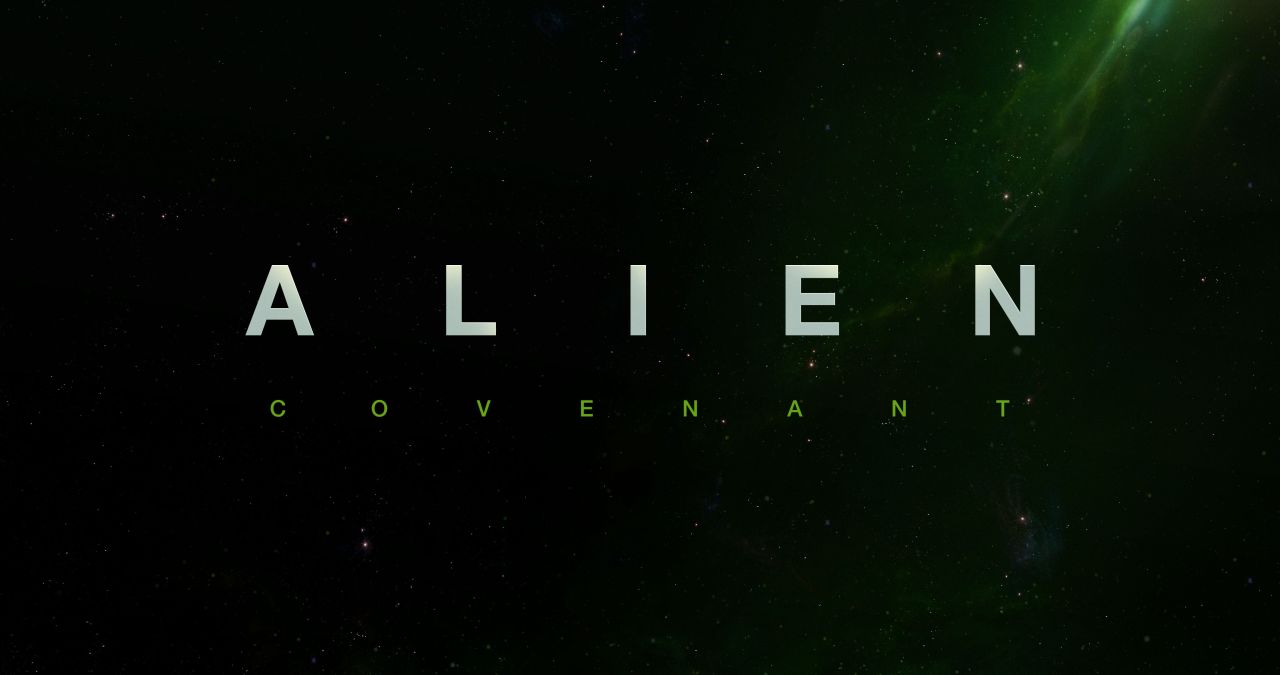
I believe that Ridley Scott wants his film to overtake the fan interest and hype for Blomkamp's Alien film because Prometheus had left such a bad taste in our collective mouths. In a recent interview, Ridley Scott made reference to his new film as titled Alien: Covenant rather than Paradise Lost. He did so casually without noting that the title was changed or that he had even used Paradise Lost in the past. And today, 20th Century Fox revealed that Alien: Covenant is the official title for the Prometheus sequel and that it is headed for an October 6, 2017 release. The synopsis refers to Covenant as the second film in an Alien prequel trilogy and that it will connect directly to the 1979 classic. Covenant is the name of a colony ship that stumbles onto a planet inhabited by the android David who survived Prometheus. The title card art evokes the original title. In fact, if you threw the image in front of me I would have beamed with the excitement that the excellent 2014 survival horror video game Alien: Isolation was getting a sequel. But, I'd be wrong.

I don't know what Ridley Scott has in store for his prequel trilogy, but I am interested in seeing if he will right the ship with the next film. The title treatment already looks more Alien than all 124 minutes of Prometheus that I have to check my hype levels. I have learned not to get my hopes up for this series, but maybe Alien: Covenant will fix the franchise in the same way Alien: Isolation redeemed the xenomorphs in video game form after Aliens: Colonial Marines threw it all away.

I want to see Blomkamp's take on Aliens, but if I have to see Ridley Scott's next instalment first I can deal with that. I think.

Friday, 13 November 2015

Spoilers for AMC's The Walking Dead Regarding a Character "Death"


I'm giving you fair warning now. If you aren't caught up on The Walking Dead or intend to watch it at some time in the future and wish to avoid spoilers of a higher magnitude such as character deaths, turn back now.


Are you still here?

Alright, so chances are you either had this "death" spoiled for you, or you saw it live and were devastated. Because everyone loves him.

I'm talking about Glenn.

Anyway, let's get down to it. Many people are skeptical about this death for of a number of reasons that have already been identified by major media outlets and voices in pop culture. And maybe I missed someone else point this out but I have an additional piece of evidence that suggests Glenn is not dead and we have been subjected to a major fake-out. First of all, we do not see Glenn being torn apart. We see him covered in flowing blood, but it is more likely the blood of Nicholas played by Michael Traynor. When major characters die (Glenn being a major character) on The Walking Dead, the actors appear on the Chris Hardwick-hosted Talking Dead post-show on AMC. Steven Yeun did not appear on the show the evening following the October 25, 2015 episode. But that's been a common indicator for media personalities.

I say whatever.

ET Online exclusive Set Photo from The Walking Dead
The biggest sign that Glenn is not dead (yet) is a set photo published in the September 15, 2015 Entertainment Tonight Exclusive Article by Leanne Aguilera who reported that Paul "Jesus" Monroe must have been cast and was spotted filming his scenes in The Walking Dead.

Anyone familiar here?

Glenn can be seen quite clearly behind and to the right of Jesus in this set photo. As of right now five episodes into the season we have yet to see Jesus, or a meeting between Jesus and Glenn. We haven't even seen Daryl or Abraham back with the group who are also seen in this photo. Of course, I am making the assumption that this is in fact Jesus because he has not been officially revealed by the showrunners or AMC. But it's hard not to see that this is the character who debuted in issue #91 of the comic book. It would also be timely for him to arrive ahead of the mid-season finale. Jeffrey Dean Morgan has been cast as Negan who debuted in issue #100 and will appear before the end of Season 6.

It would be very effective to fake-out the audience on Glenn's show death and have him confront Negan in the finale. But I'll let the comic readers take that as they may and the TV watchers to wait and see.

Sunday, 1 November 2015

"But Was It Fun?": Halo 5: Guardians Review


A Long-Time Fan

I have been playing Halo for a long time. It's the title that pushed me into the core gaming community and has kept me a part of it ever since. It's the reason I've been an Xbox-first gamer and it drove my interests in literature and other media as I've developed a keen eye for science fiction and military science fiction. I read the books, I read the comics, I watch the animated features, the episodic series, collect statues and figures and so on. I know Halo pretty well in and out. I'm no pro, but I have enjoyed the franchise just the same. It's like the Star Wars equivalent of video games for me.

So how does Halo 5: Guardians stack up against the rest of the series? And how does it fit in the Halo Universe? Let's take a look!

New but Familiar Gameplay

The core mechanics and gameplay are a refreshing take on the series that made its name on slow-moving and heavy heroes. The series may have begun with no sprinting and tank-like mobility, but the overall lore of the universe allows for these super-soldiers to maneuver much more fluidly. What good is a Mjolnir suit if you can't crash through the enemy or mantle and clamber onto a ledge? The thruster packs have always been there to use if needed, but they weren't in the games. Now you can dodge out of fire or across a gap to make leaps you never could before. But be careful. If you get caught with your shields down and decide to make a quick sprinting exit, they won't recharge until you stop. For the "purists" who believe sprinting shouldn't be in the game, this adds a kink in the armour that limits your ability to motor on through enemies with ease. As a result, the mobility remains fun and frantic. You feel like a walking Spartan tank but you don't lose the sense of danger in the face of the enemy.

Many fan-favourite weapons make a return such as the AR and BR along with a host of Covenant and Promethean weapons that have always looked and acted impressively in your hands. It was a bit upsetting to see the SPNKR rocket launcher go by the wayside, but the new one can fire a heavy salvo. There seems to be more than one tool for any situation. And they feel so tangible and hefty with the Xbox One controller and its duel vibration packs in the triggers. I have always loved this feature and each time I play a new game it seems that they have improved on the function.

Vehicles remain a staple in the Halo gameplay, making a long running mission pick up in a flash, or should I say Phaeton. Oh boy, are those Promethean aircrafts fun. I've always enjoyed the Banshee and even that Hornet in the past, but the Phaeton's controls feel better than the Hornet's and it packs a punch.

The level design can be a bit confusing at times, but it sticks with the mostly linear pathways and grand-scale structures. There are a number of pathways to choose from in a lot of different situations, so flanking can be made easier, but it also works in your enemy's favour. If you take your time to look for hidden passageways and caves, sometimes you will come across vehicles or weapons caches that will give you the advantage in a pinch.

Past Halo games have been primarily single-play games in terms of story, but co-op has always been an option. Before Halo 5, I used to pretend that the second player was another Spartan II like Fred, Kelly or Linda, making it more fun than two Master Chiefs running around. The lore has always supported the opportunity to get in a squad and combat the enemy together, but it always seemed a bit awkward in the core games. Now, Halo 5: Guardians allows you to play in a fireteam more naturally with squad-based combat in both single-player and co-op gameplay. As John-117 you lead your fellow remaining Spartan IIs in Blue Team and as Spartan Locke you command Fireteam Osiris, made up of other Spartan IVs Olympia Vale, Holly Tanaka and Edward Buck, the fan favourite former ODST played by Nathan Fillion.

Lore Continuity and Fans of the Universe

Halo 5: Guardians seems to have been written with fans of the extended Halo lore in mind. At least, for the most part. The Halo books have told great stories about the Spartan IIs, IIIs and even sometimes the new IVs, but some of the greatest instalments were written by Eric Nylund. He and Frank O'Connor created Blue Team in Halo: The Fall of Reach and paved the way for a deep story within the core game experience. Halo 5 doesn't exactly explain any of Blue Team's story or relationship, possibly assuming you've heard the story or will seek it out. However, even a fan of the lore would like to know "how the hell did Chief find Fred, Linda and Kelly again?"

Spartan Locke and Fireteam Osiris are new additions to the Halo canon, if you don't count Locke's time with ONI in Halo: Nightfall, which does not come recommended. These Spartan IVs work well together and I feel the writing and dialogue flow suited them better. Buck was a fan favourite character in Halo 3: ODST and makes a triumphant return as a Spartan in Halo 5. He carries the charisma for all of Osiris and they would have suffered without him. I wasn't given any reason to like this team other than Buck, but their chemistry and playability allowed Osiris to grow on me. Even Spartan Locke wasn't such a bad guy. Ah, yes. "Bad guy," which leads me to my next point.

Misleading Marketing and Locke-Sided Gameplay

Halo 5: Guardians has been introduced to fans as a "Hero Vs. Hero" story line pitting Master Chief and Spartan Locke against one another. Advertisements and live-action commercials promised a competitive relationship and general dislike between John and Locke, what with Chief being officially dead according to ONI and Locke's mission being a recover or kill order. Chief was branded as a traitor depending on the perspective the marketing took at the time. But in the game, Chief goes rogue with Blue Team and Fireteam Osiris are ordered to retrieve them. He is given permission to use deadly force, but he doesn't. Chief and Locke only have a very well choreographed fist fight which I found to be similar to the fight between Cooper and Mann in Interstellar because of the physical display amidst a universe-spanning storyline of greater significance. When Locke finally reaches Chief they come out together and Locke is made a hero for preventing Blue Team from being led down a dark path. Chief is not officially dead at any time, and Locke isn't the aggressive man I'd been told he was.

I'd like to make a side note regarding the gameplay split between Chief and Locke, and it may upset longtime fans of John's story. There are fifteen chapters that make up the full Halo 5 campaign, but Chief is only playable in three of them. Three! The main character, the beloved mascot of the Xbox isn't even in his own title for more than twenty percent, and when he is he is hardly the hero he has always been known to be. This is incredibly frustrating for fans and it doesn't bode well for the future of Spartan Locke. He may be a good character but he is not a replacement for Spartan-117.

A Return to Multiplayer Form

Halo 2's arena multiplayer changed the game for console shooters in the years that followed, even making it hard for its successors to match or surpass the feat achieved by the sequel in 2004. I believe Halo 5's multiplayer modes are the best in the series since Halo 2, with the return of 4v4 arena and a new addition in Warzone. The new mode combines campaign-like objective based PVE with competitive PVP multiplayer. Spartans must capture their base by clearing out AI players and defeat bosses around the map all while defending themselves and their base from enemy online player and attempting to take their locations as well.

Warzone is a long battle, but lots of fun because Halo 5 has introduced a Requisition System. Players unlock Req Packs by gaining experience and hitting level milestones, and depending on XP spent and the level hit, the Req Packs could be a bronze, silver or gold tier unlock. Players unlock temporary vehicles, special weapons and abilities for Warzone as well as permanent unlocks like armour and weapons skins. This makes levelling up a lot of fun for Halo 5 and builds on the drab system introduced in Halo 4. I'm always on the lookout for a cool new helmet or an Magnum weapon skin.

Arena multiplayer brings back that close-quarters hard hitting team game that was so familiar in the first two Halo games.  The new Spartan abilities increase the speed of the Arena game, allowing more verticality to the sci-fi shooter. It doesn't feel gimmicky like Call of Duty: Advanced Warfare's vertical systems, and it is less weightless than Titanfall's, making Halo feel more grounded and bulky without sacrificing speed. The sprint ability may not seem very Halo, but the shield recharged restriction while making a run for it curbs the power considerably.

Breakout is a new arena mode introduced in Halo 5 that flings Spartans into cool new maps for a One-Flag CTF, but that flag isn't easy to get. You start with SMGs and have half your shields, so good luck staying alive in the open. Breakout uses a round-based elimination system with a best-of-nine series because the rounds only last as long as the flag is captured, all four players are killed or a total of two minutes. I've never seen a round clocked out. It's fast and fun. A welcomed new mode.

But Was It Fun?

Yeah, Halo 5: Guardians is fun. I have my issues with the story and sometimes Warzone can be a little complicated and hectic, but the game is worth the purchase. The campaign is quick, but it plays well for those who aren't huge into the lore. If you haven't played a Halo game  and you have an Xbox One, no excuses. Pick up The Master Chief Collection and knock out the first  four (and don't forget ODST!). You can really see how far these games have come. I wish there was more Master Chief and Blue Team, but it was interesting to play as a new character for a little time. Locke isn't such a bad guy after all, and I hope he can return in the future. However, I don't want him around at the expense of Master Chief. If I continue to get less Chief because of Locke, toss him out the air lock because the light is not green, Spartan.

Play Halo 5: Guardians for a fun, but convoluted campaign and a refreshing multiplayer.