
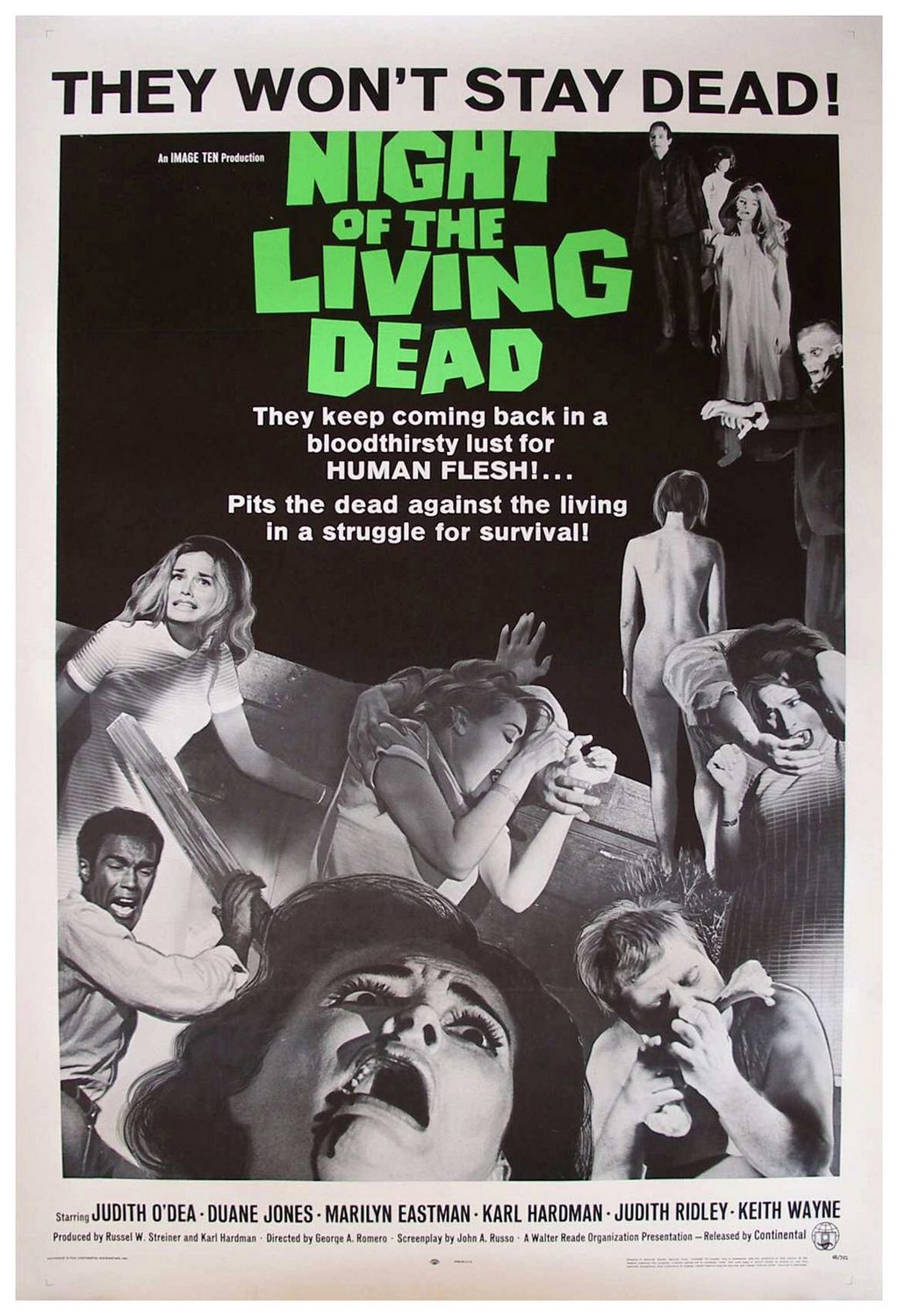
 I have enjoyed jumping back and forth from old to new films so I'm going to keep with that trend. So far we have seen a slasher that influenced a generation of films and a paranormal horror introduce new ideas. So let's throw it back to 1968 for an undeniable classic by the legendary George A. Romero: Night of the Living Dead. There's a reason I've been doing this feature series in October. It's because of this month that I associate so many horror movies, Halloween related or not, to this month. Old movies like Halloween and Night of the Living Dead would be played on classic movie channels. Without these TV airings I would not have encountered so many of the films that have influenced my taste in visual media. Night of the Living Dead introduced me to the most iconic vision of zombies to have graced the medium.
To summarize it quickly, Night of the Living Dead tells the story of Ben (Duane Jones), Barbra (Judith O'Dea) and five other survivors find themselves in a house in rural Pennsylvania while the dead return to life outside in search of the flesh of the living.
George Romero's first "Dead" film reimagined the concept of zombies and defined the most reused elements of the undead. These things shamble, shuffle, groan and lurk in the dark corners of the crumbling society eating those who have not turned and you better shoot them in the head. It has influenced a countless other films, television shows, books and comic books, most notably The Walking Dead in comics and TV. Robert Kirkman directly references Romero's films as a primary inspiration for his world, except that it doesn't just go away when the credits roll.
 But rewind to 1968 when critics detested the excessive gore and questioned the filmmakers for their "sadistic" approach to storytelling. Those critics were not seeing the forest for the trees or the horde for the zombies. Night of the Living Dead is deeper than blood, guts and cannibalism. Romero's legacy also includes his emphasis on social issues relevant to American society. In 1968 Night of the Living Dead critiqued Cold War politics and domestic racism that plagued the United States. Not many were doing this in 1968, at least not on a blatant level like Romero. Night of the Living Dead embodies social commentary through the lens of horror, emulating the black-and-white footage of the Vietnam War, excessive violence and careless problem solving. Whether Romero's casting of Duane Jones was intentional or not, a black character who is a tragic hero still evoked thematic references to Martin Luther King Jr. and Malcolm X as critic Mark Deming pointed out. Rather than ending happily, Romero's iconic film closes with tragedy. It is less Hollywood and more ripped-from-the-headlines domestic violence.
Night of the Living Dead spawned many sequels, remakes, ripoffs and spiritual reimaginings. A lot are bad, some are good. I'll talk about one of these in the days to come.
So do you like zombies? Want to see where the popular depiction originated? Romero is a legend and made great independent films. He's a smart guy and I really like his work. Check out Night of the Living Dead this October.

No comments:
Post a Comment